Featured product case study
A smoother clinic day, from the first appointment to the last.
Nexo Salud brings appointments, reception, clinicians, team schedules, patient context, and digital prescription workflows into one workspace built around the shared agenda.
Agenda
day and month in one view
eRx
digital prescription workflow
Team
workspace by role
Visits
status changes in context
Role
Product definition, UX, full-stack development, data model, and release work
Users
Medical reception teams, clinicians, and practice administrators
Status
Deployed product in active development, with agenda, team, and scheduling workflows in place
Stack
Next.js, TypeScript, Supabase, PostgreSQL, Row Level Security, Vercel
The problem
A clinic day moves between reception and professionals. If appointments, patient context, availability, and status updates live in separate places, the team has to repeat information and rebuild the picture of the day as it changes.
The goal
Create one operational core for individual practices and multi-professional clinics: make the daily agenda easy to read, keep appointment changes in context, and give each role the tools it needs without creating separate products for each type of organization.
Nexo Salud · V10.5 product film
From a scattered day to one clear flow.
A vertical product film that follows the workday through the shared agenda, reception, professional workspace, team, and digital prescription workflow.
Product views
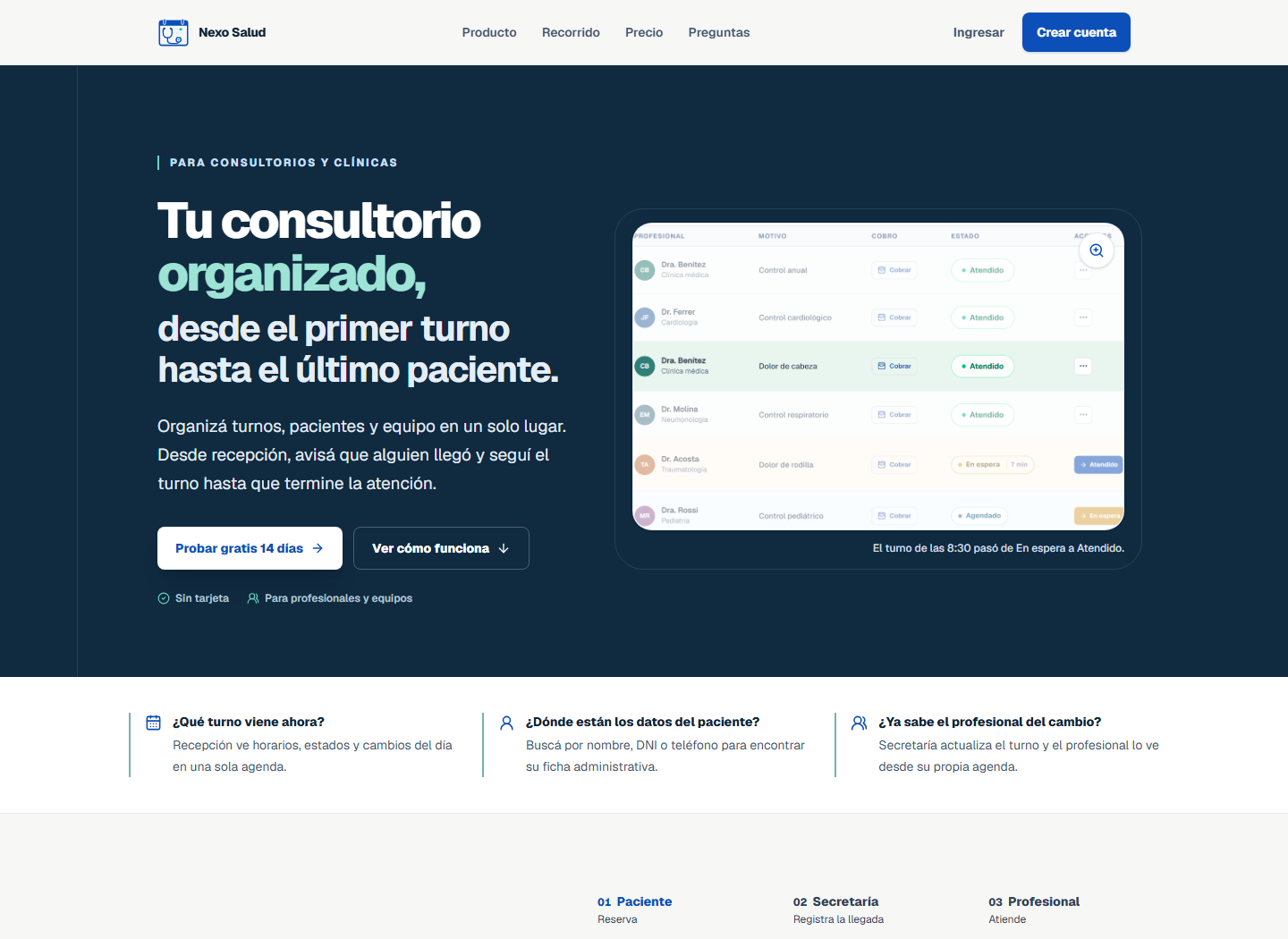
Nexo Salud landing page
The public product experience introduces the scheduling, team, and clinic workflows.
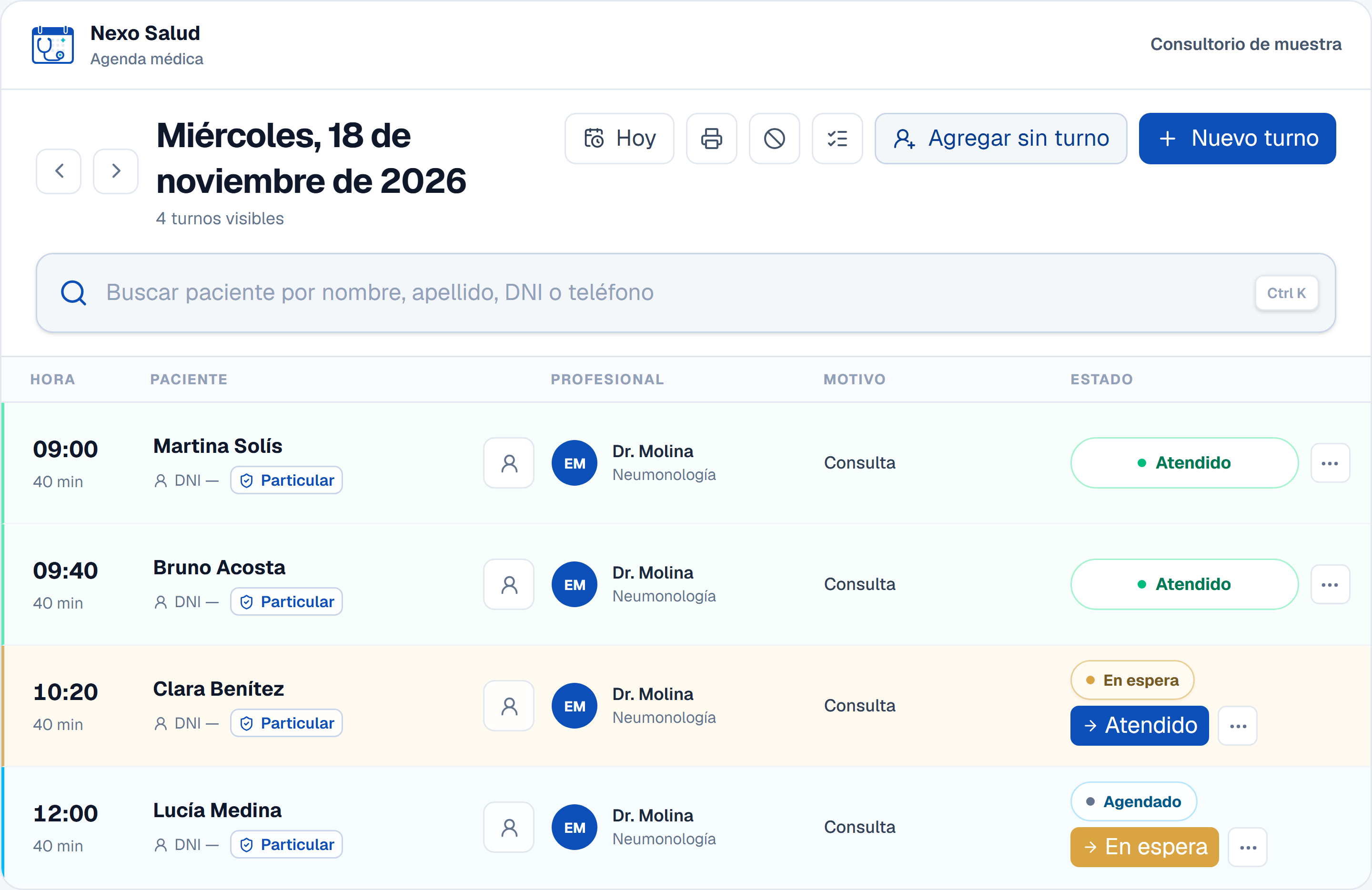
Shared clinic agenda
Appointment times, professional context, and status changes stay visible across the workday.
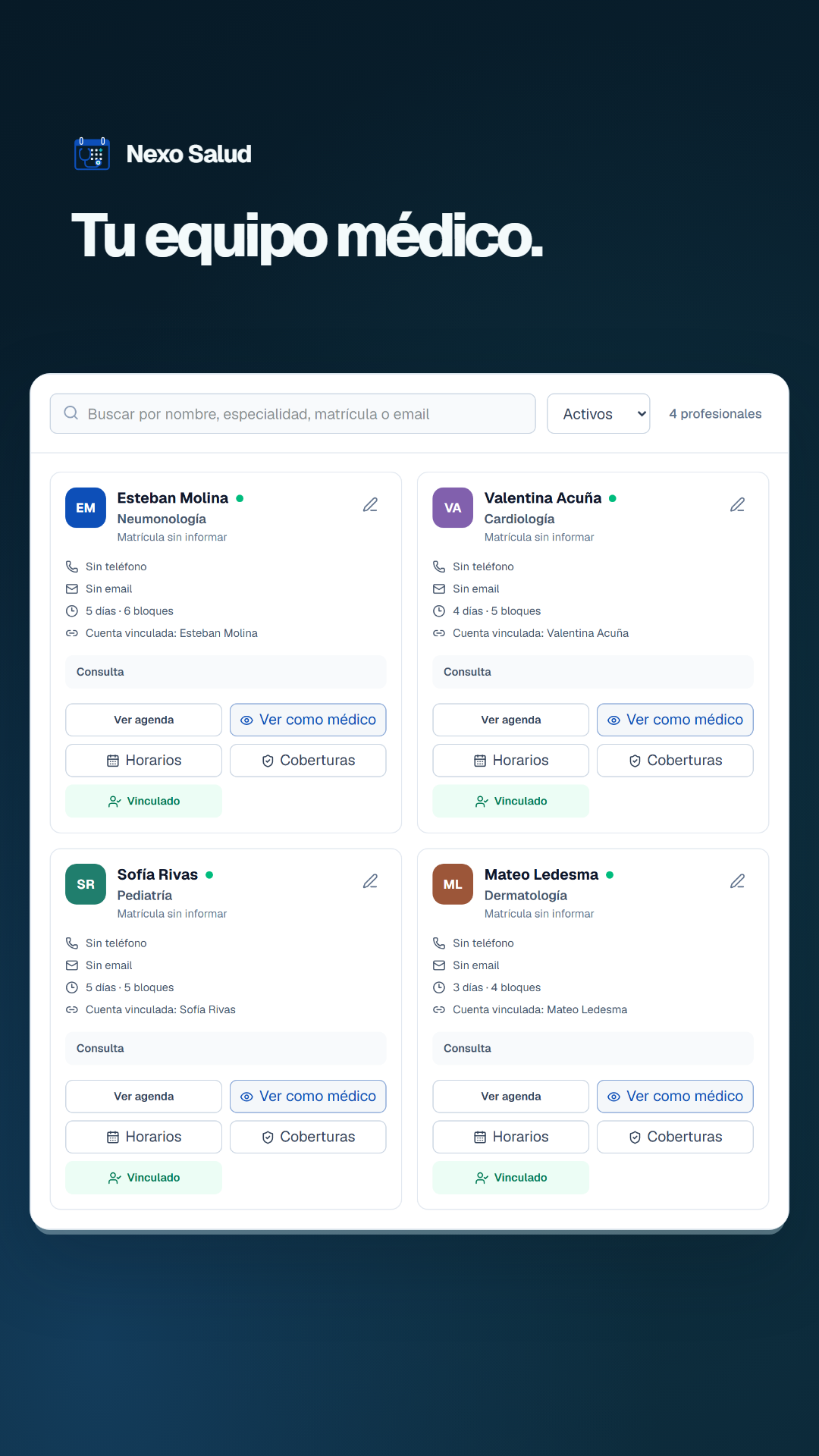
Team and professionals
Manage professional profiles, roles, schedules, and team access from one workspace.
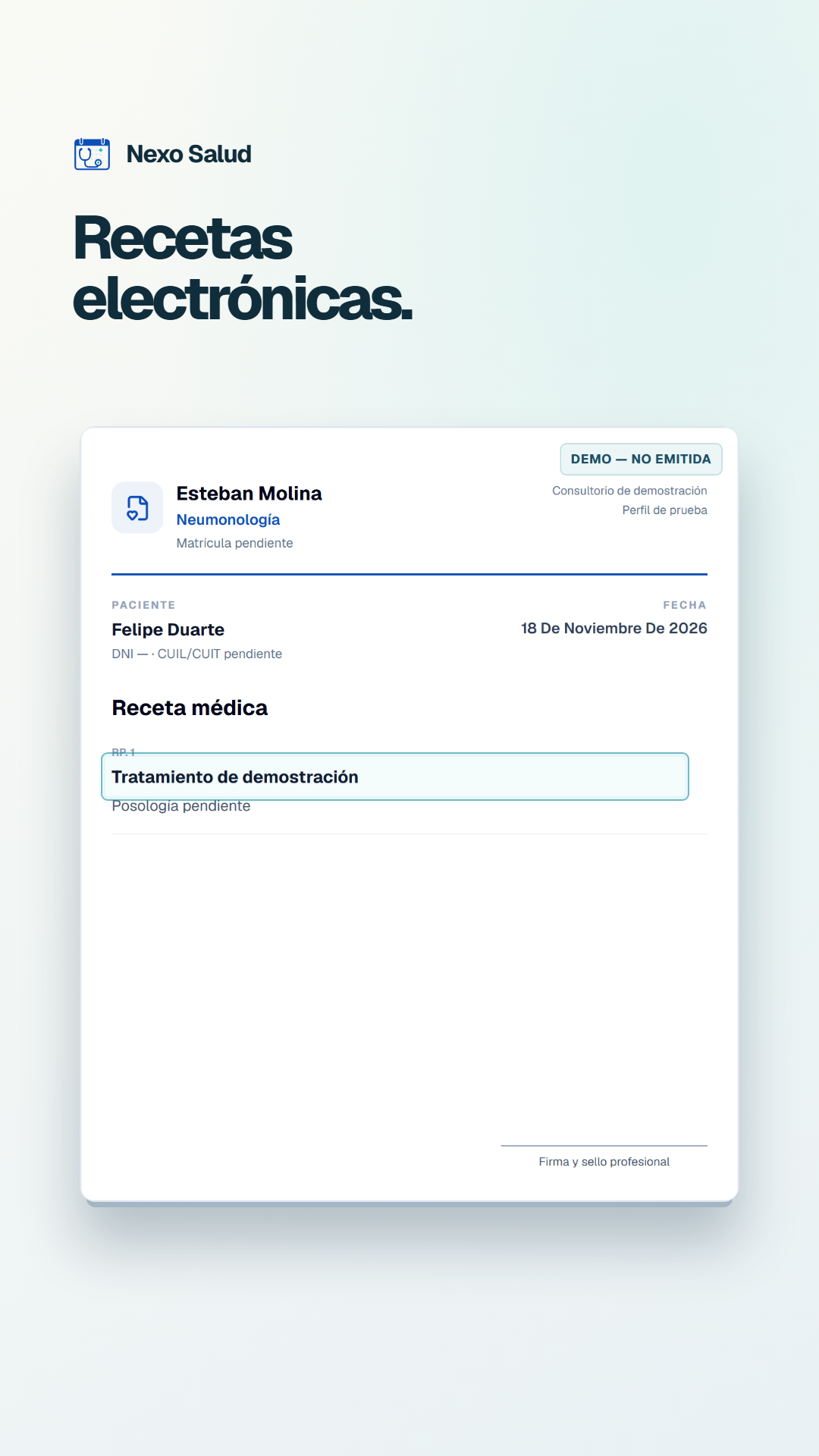
Digital prescription workflow
Structured treatment details in the clinician's workspace; electronic issuance depends on an authorized provider integration.
What the product brings together
Daily and monthly agenda
Move between the selected day and calendar, search the schedule, filter by professional, and scan appointment states in the context of the full workday.
Reception flow
Keep the work queue visible as an appointment moves through reserved, confirmed, waiting, in-consultation, completed, absent, or cancelled states.
Clinician view
Give each professional a focused view of their agenda and patient context, with the same appointment represented in the wider clinic workflow.
People and organizations
Model practices, clinics, members, and roles around one organization structure so the same core can support different team sizes.
Schedules and availability
Configure professional hours and exceptions, then use availability and overlap checks as part of appointment handling.
Digital prescriptions and orders
Organize treatment details in the professional workflow. Electronic issuance depends on integration with an authorized provider.
How the product evolved
Start from the agenda
Set the shared daily schedule as the center of the product, with clear hierarchy for time, patient, professional, and appointment status.
Prototype before connecting data
Build and validate the working interface first, then add persistence and tenant access as the product model becomes clear.
Model the clinic, not a single user
Represent practices and clinics as organizations with memberships and distinct roles, rather than forking the app for each team.
Make appointment rules explicit
Centralize status transitions, availability checks, and overlap prevention so the interface reflects one set of operational rules.
Expand in deliberate stages
Add patients, coverage, professionals, schedules, notifications, and document drafts around the agenda while keeping legal or commercial flows behind their own validation gates.
Technical and product decisions
- Next.js App Router and strict TypeScript keep the product structured by domain as its modules grow.
- Supabase Auth, PostgreSQL, organization membership, and Row Level Security form the data-access model.
- Appointment state rules and schedule-conflict checks live in shared domain/server logic, not in visual components alone.
- Dates use the IANA zone America/Argentina/Buenos_Aires rather than a manually fixed UTC offset.
- Prescription and order workflows are distinct from valid clinical issuance; an authorized provider integration is required for electronic delivery.
What is in place
Nexo Salud connects reception and clinician views through one shared agenda, with team roles, schedules, and prescription workflows around the clinic's daily operation. A measured pilot will show how the product fits each team's routine.
What I would validate next
Run a structured pilot with clinic teams to measure onboarding effort, scheduling errors, role fit, and daily adoption. Validate the provider integration as part of the electronic issuance workflow.