Product Case Study
A responsible job search assistant for junior candidates.
A web app that turns a CV and search preferences into a ranked list of job opportunities, with fit explanations, red flags, suggested messages, a local tracker, and explicit limits against auto-apply or platform scraping.
3
allowed job sources
CV parser
Top 10
ranked opportunities
CSV
tracker export
Role
Product design, frontend, parsing logic, scoring heuristics, API integration and UX
Users
Junior, trainee and early-career candidates
Status
MVP ready, local persistence and real source integrations
Stack
Next.js 16, React 19, TypeScript, Tailwind CSS v4, pdfjs-dist, localStorage
The problem
Job search is repetitive and noisy, especially for junior candidates. Many offers look relevant but hide seniority mismatches, weak remote fit, low source trust or vague requirements. Applying blindly wastes time and creates a messy follow-up process.
The goal
Build an ethical assistant that helps candidates decide where to apply, not a bot that applies for them. The product should read a profile, search permitted sources, rank opportunities, explain the score and keep the application process organized.
Product views
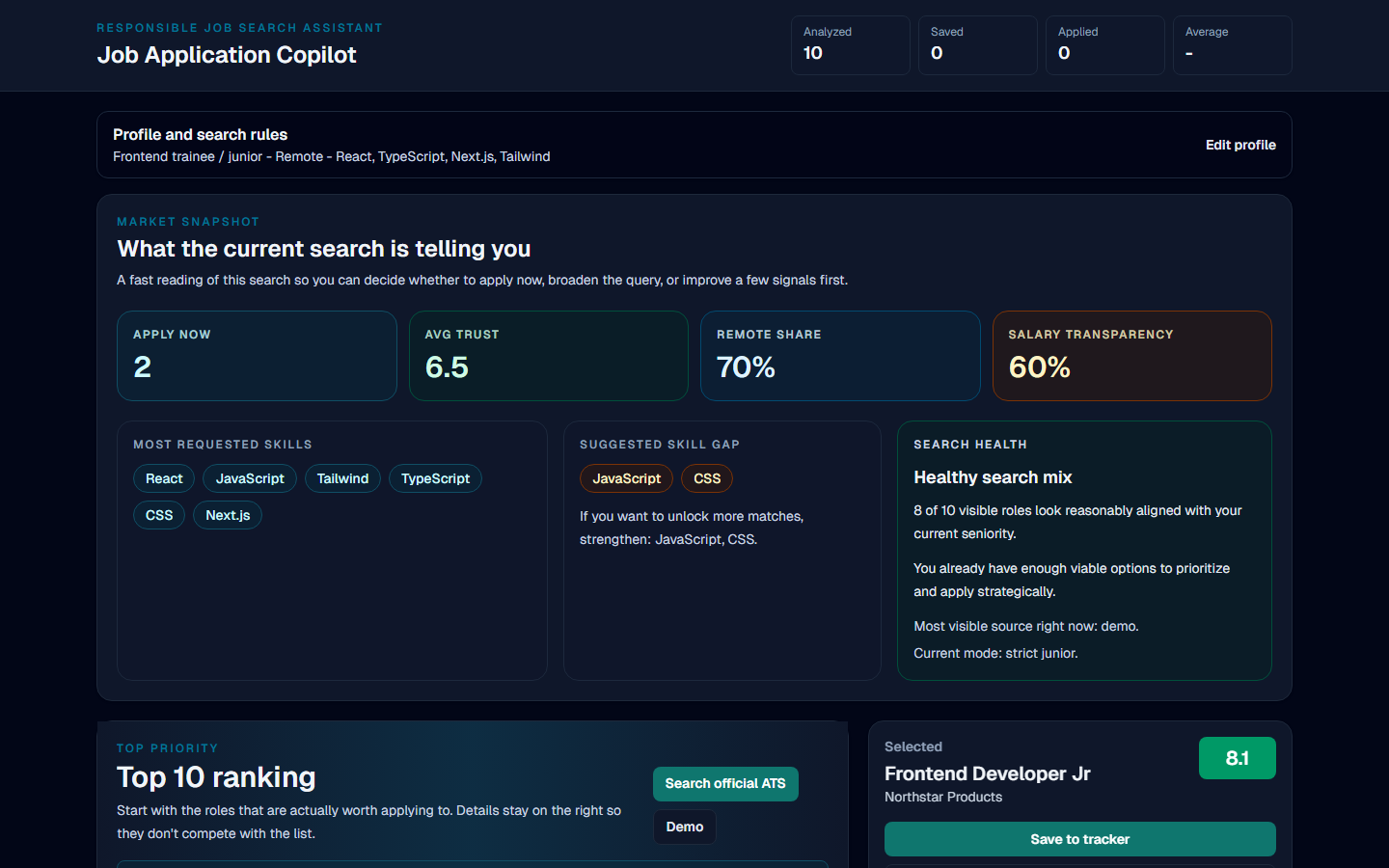
Ranking workspace
Market snapshot, top 10 ranking, selected job analysis, red flags, message strategy and tracker tabs.
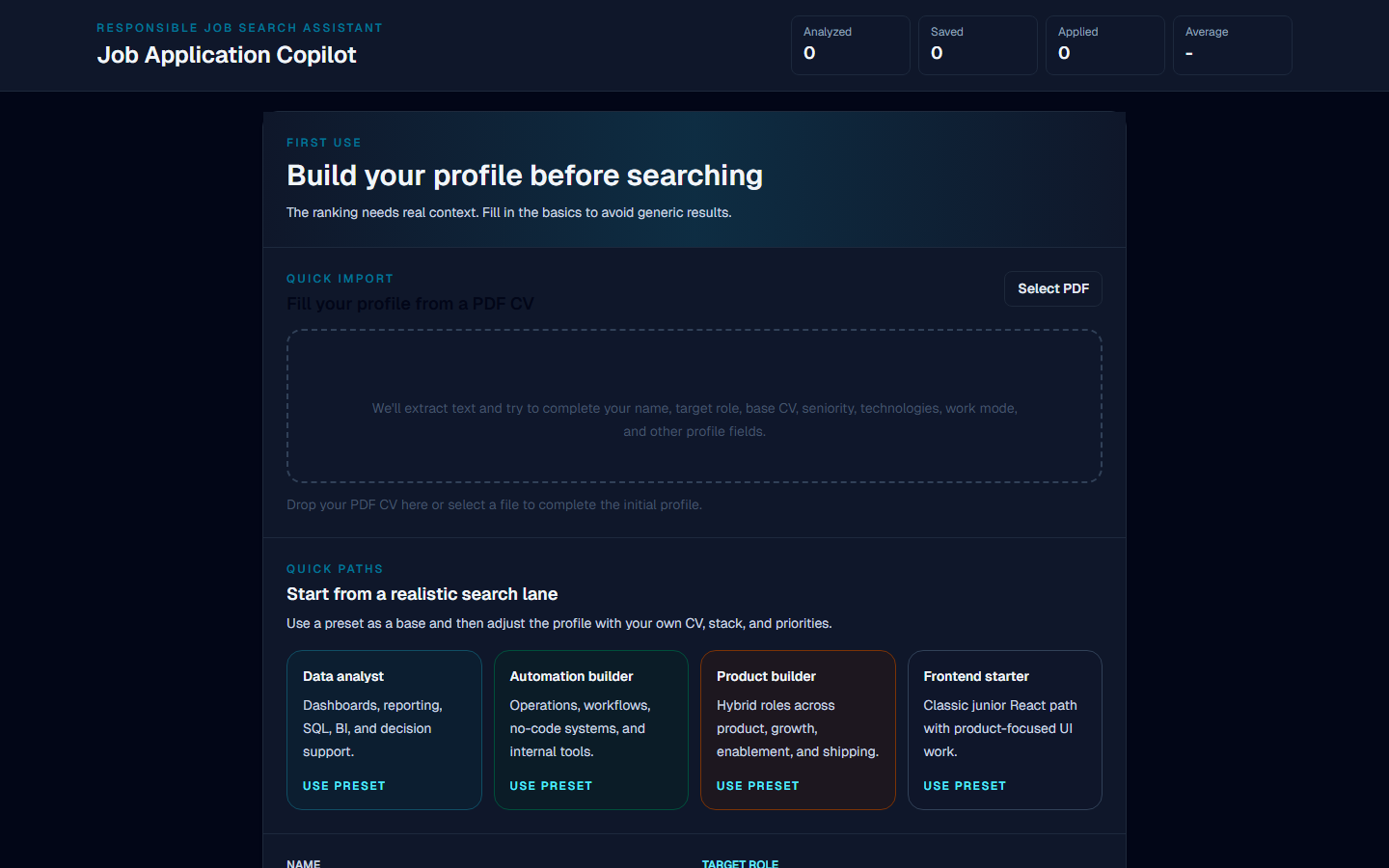
Guided onboarding
The app asks for profile basics before searching, or lets the user import a PDF CV.
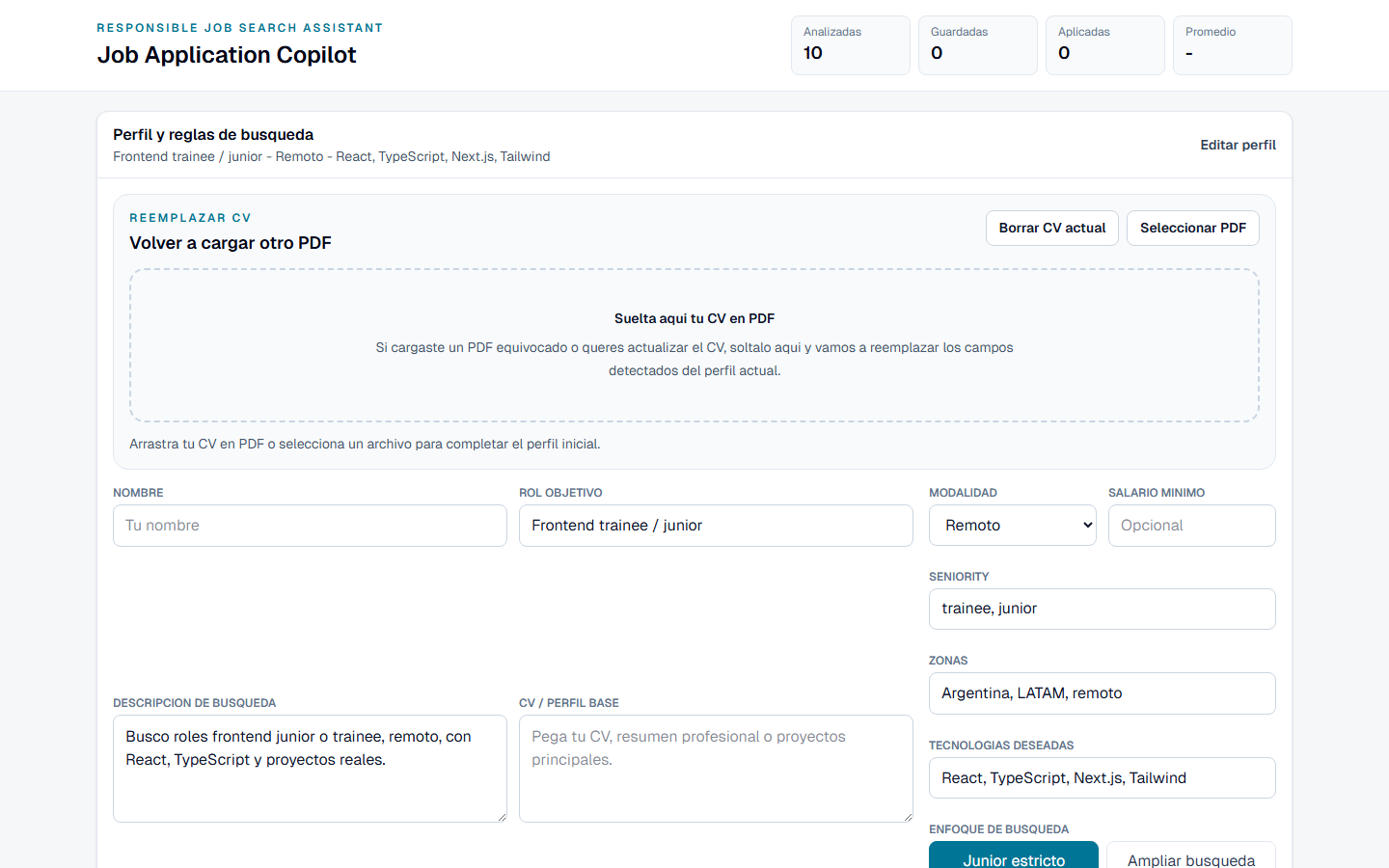
Profile editor
Editable extracted fields: role, seniority, locations, technologies, languages, preferences and CV text.
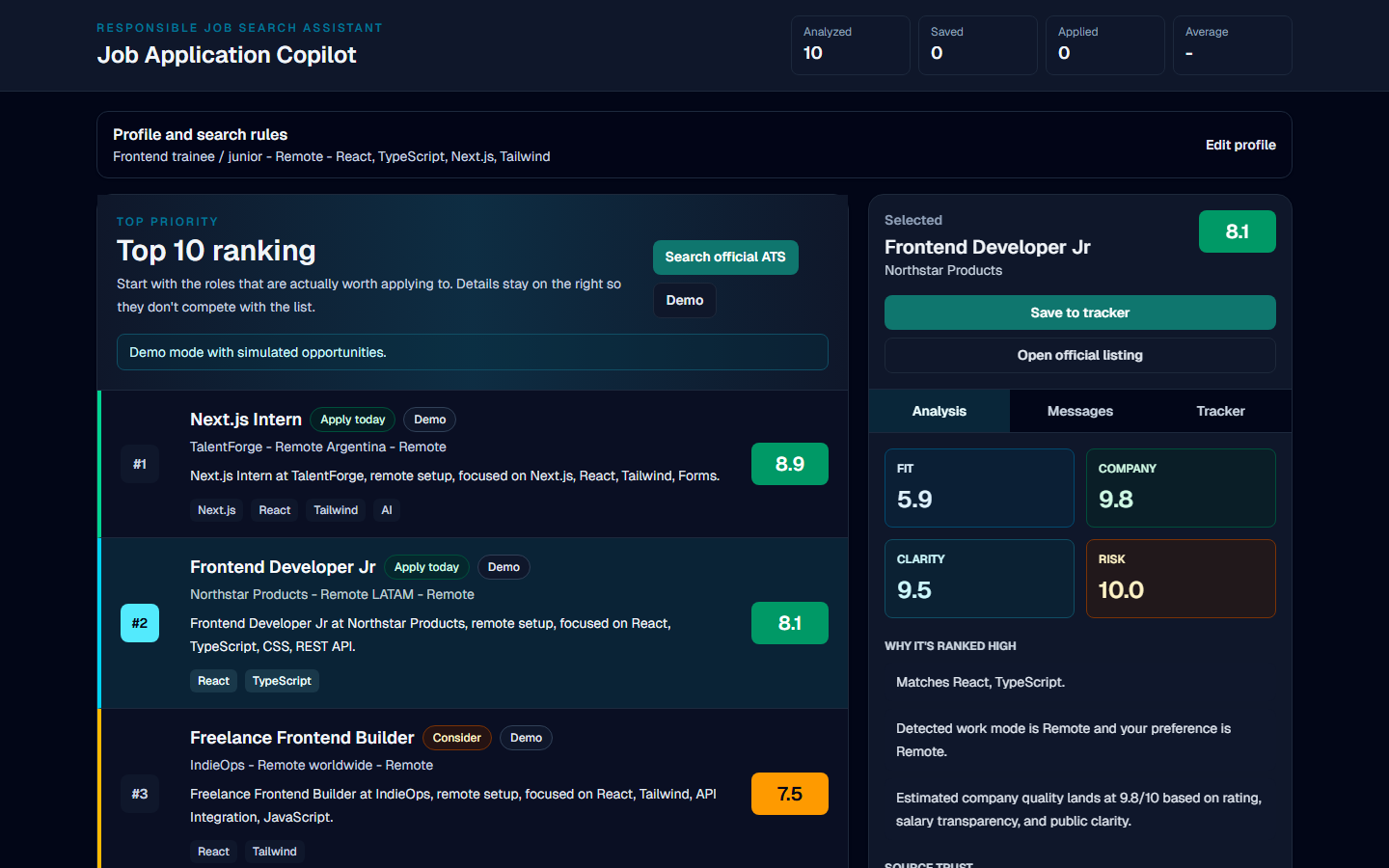
Dark mode workspace
Ranked jobs with fit score, risk signals, source trust and application strategy in a dense dashboard.
What the system does
CV import
Reads a dropped PDF resume client-side and extracts candidate signals for ranking.
Search rules
Lets the user configure role, seniority, location, work mode, technologies and search mode.
Allowed sources
Queries Greenhouse boards, Remotive and Adzuna instead of scraping protected platforms.
Fit scoring
Scores opportunities using skills, seniority, remote fit, clarity, red flags and source trust.
Message strategy
Suggests outreach angles and short messages based on the selected opportunity.
Tracker
Saves jobs locally, supports notes/statuses and exports the application list to CSV.
How I built it
Defined ethical constraints first
The app intentionally avoids LinkedIn scraping, browser automation, auto-apply flows and fake engagement behavior.
Built the profile layer
I used pdfjs-dist to reconstruct PDF resume lines and extract profile data before the search starts.
Made ranking explainable
Instead of returning a black-box score, each job shows fit reasons, risk signals, source trust and a recommended application strategy.
Technical decisions
- Next.js App Router with a dashboard-first interface instead of a marketing landing page.
- Client-side PDF parsing with pdfjs-dist, reconstructing lines from coordinates before extracting fields.
- Backend route for permitted job sources: Greenhouse curated boards, Remotive and Adzuna.
- Shared normalized job shape with deduplication, relevance filtering and source trust scoring.
- Local scoring layer for skills, seniority fit, remote/hybrid match, red flags and company clarity.
- localStorage persistence behind a small adapter so Supabase or another database can be added later.
Impact
The project turns job search from a scattered manual process into a ranked, explainable workflow. It reduces low-signal browsing, helps candidates prioritize better matches and keeps application follow-up measurable.
Why this project matters
It fits my portfolio because it solves a real tedious workflow with software, data and responsible automation. It also shows product judgment: the app automates decision support without crossing into spammy auto-apply behavior.