Healthcare Automation Case Study
Respiratory clinic system that turns intake data into printable medical reports.
A real operational tool for a respiratory clinic: reception loads patients, the spirometrist captures values once, the doctor validates the final result, and the system generates the correct report for spirometry, cyclometry, and mutual coverage.
300+
reports generated
3
role-focused views
2
study workflows
SO2/FC
captured before and after
Role
Workflow analysis, product design, full-stack development, report automation, and iteration with real use.
Context
Respiratory clinic operation: patient intake, PDF review, medical validation, printable reports, calendar, patient history, and mutual-aware statistics.
Status
Production workflow used in a real clinic, with role-focused views for reception, doctor, and spirometry work.
Stack
Django, Python, Supabase, Vercel, document generation, PDF/print workflows.
The problem
The report workflow depended on many small manual decisions: patient data, study type, coverage, SO2/FC values at rest and after bronchodilator, physician result, and the final printable document. Before this system, report handling also involved manual sending, printing or even taking photos of documents, which was slower, less professional and used unnecessary paper.
The goal
Build a simple internal system where each important clinical value is captured once, the pulmonologist can review the spirometry file and automatic suggestion, save the final medical result, and then reuse that decision to generate the correct printable report.
Real System Screenshots
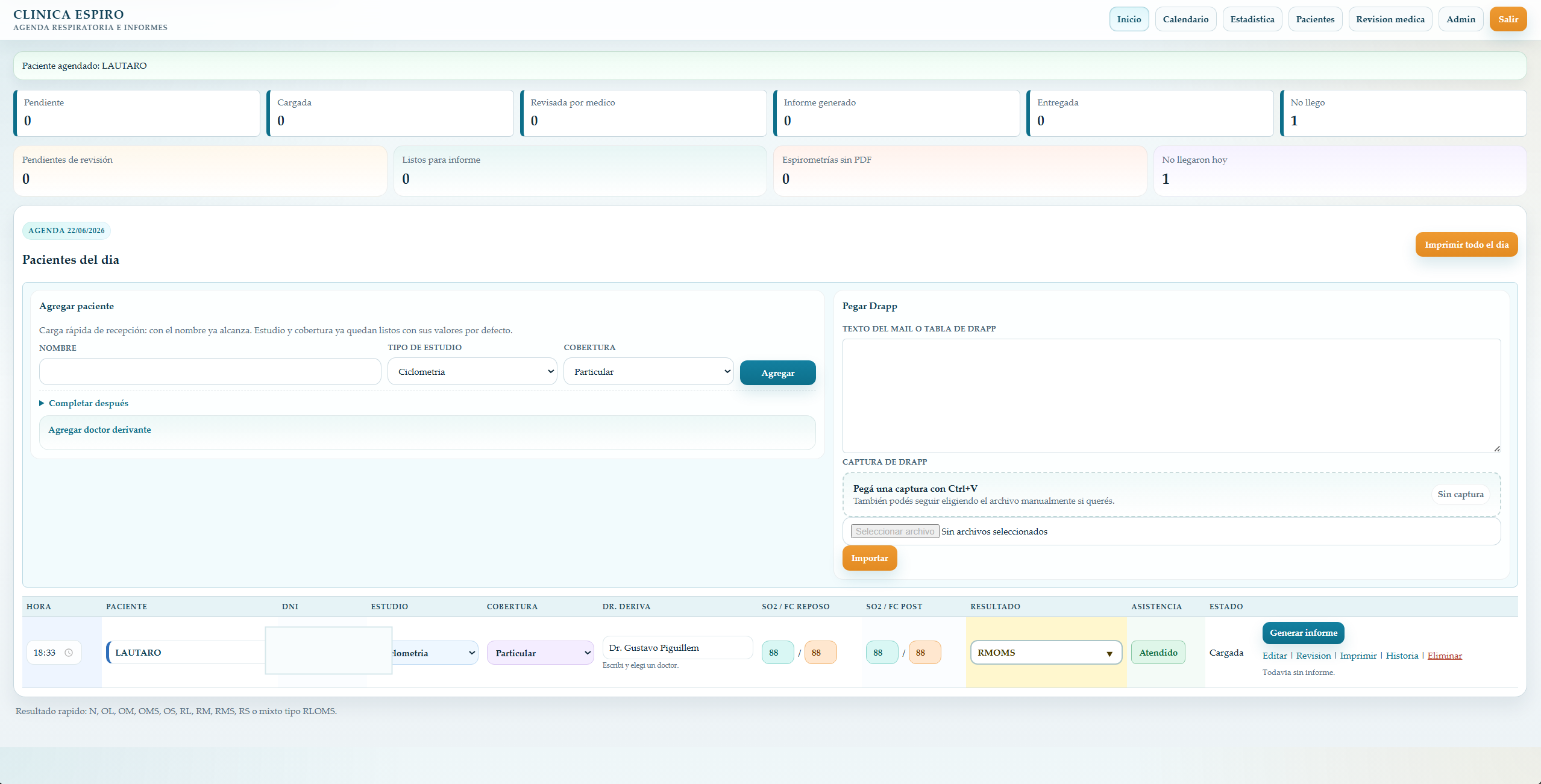
Daily intake
Reception adds the patient, selects study type and coverage, records SO2/FC at rest and post bronchodilator, and keeps the patient status visible.
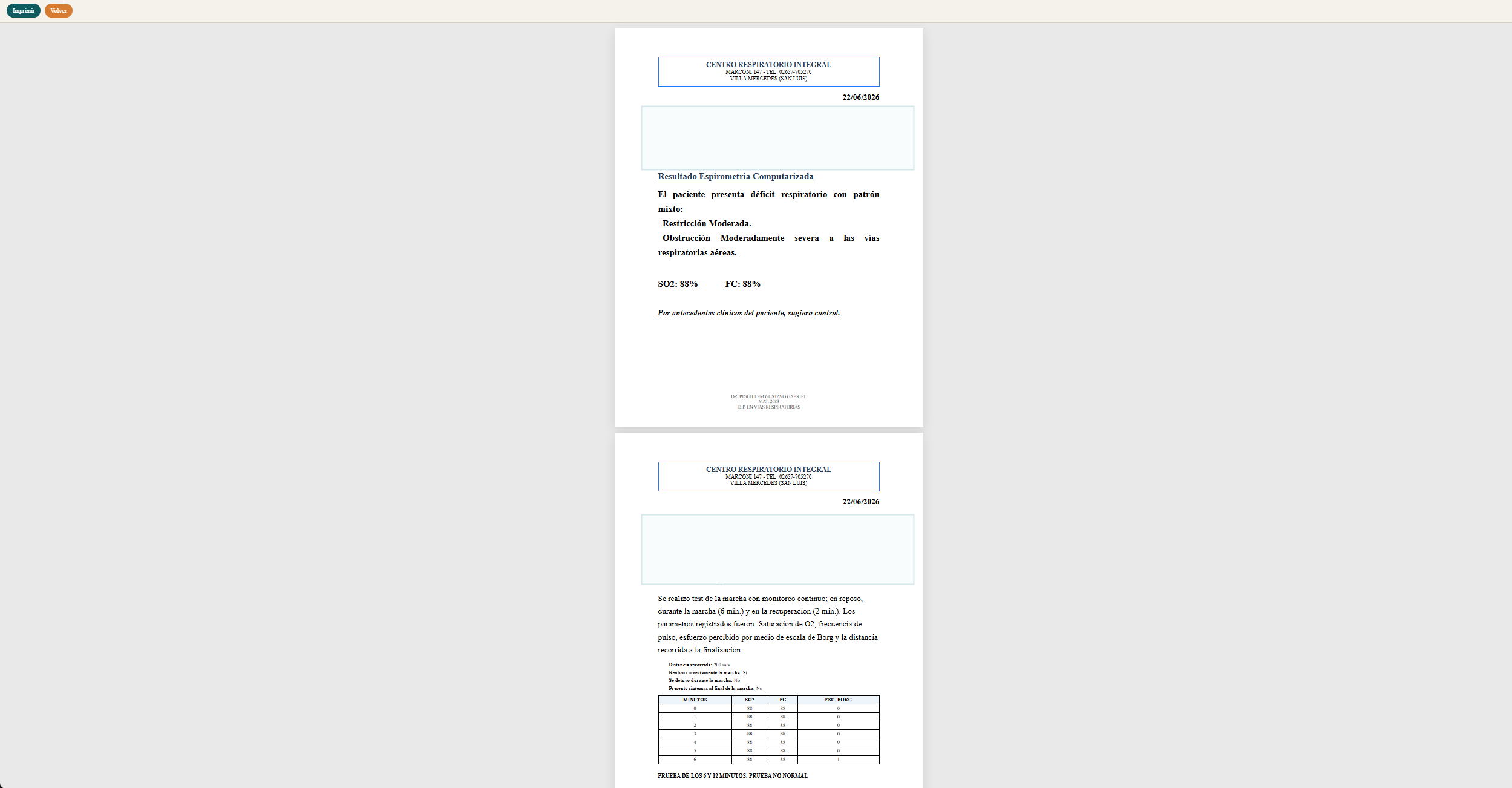
Automatic report
The printable output is generated from the captured data. Spirometry, cyclometry, private coverage and insurance coverage can produce different report content.
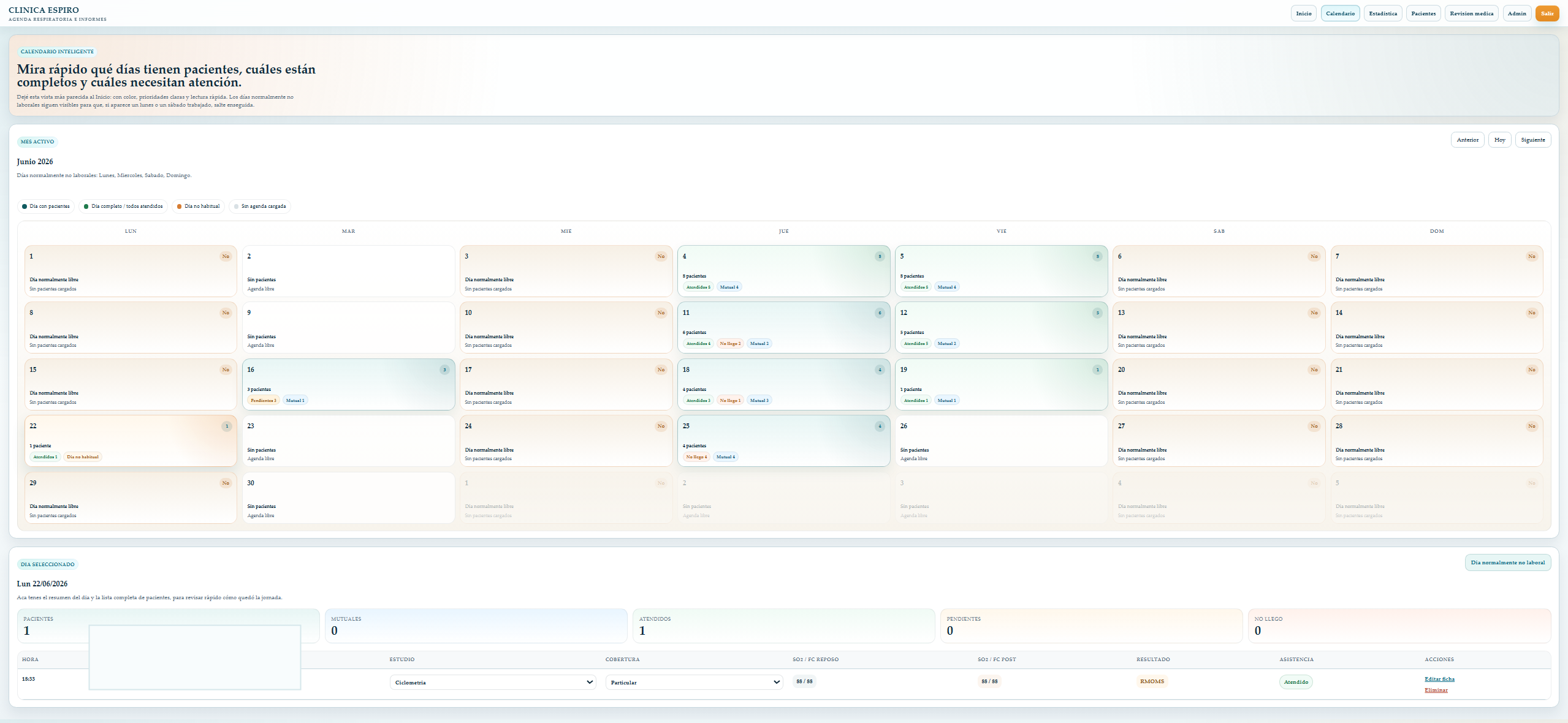
Operational calendar
The calendar shows which days have patients, which are complete, and lets the clinic open or edit a day if something was loaded incorrectly.
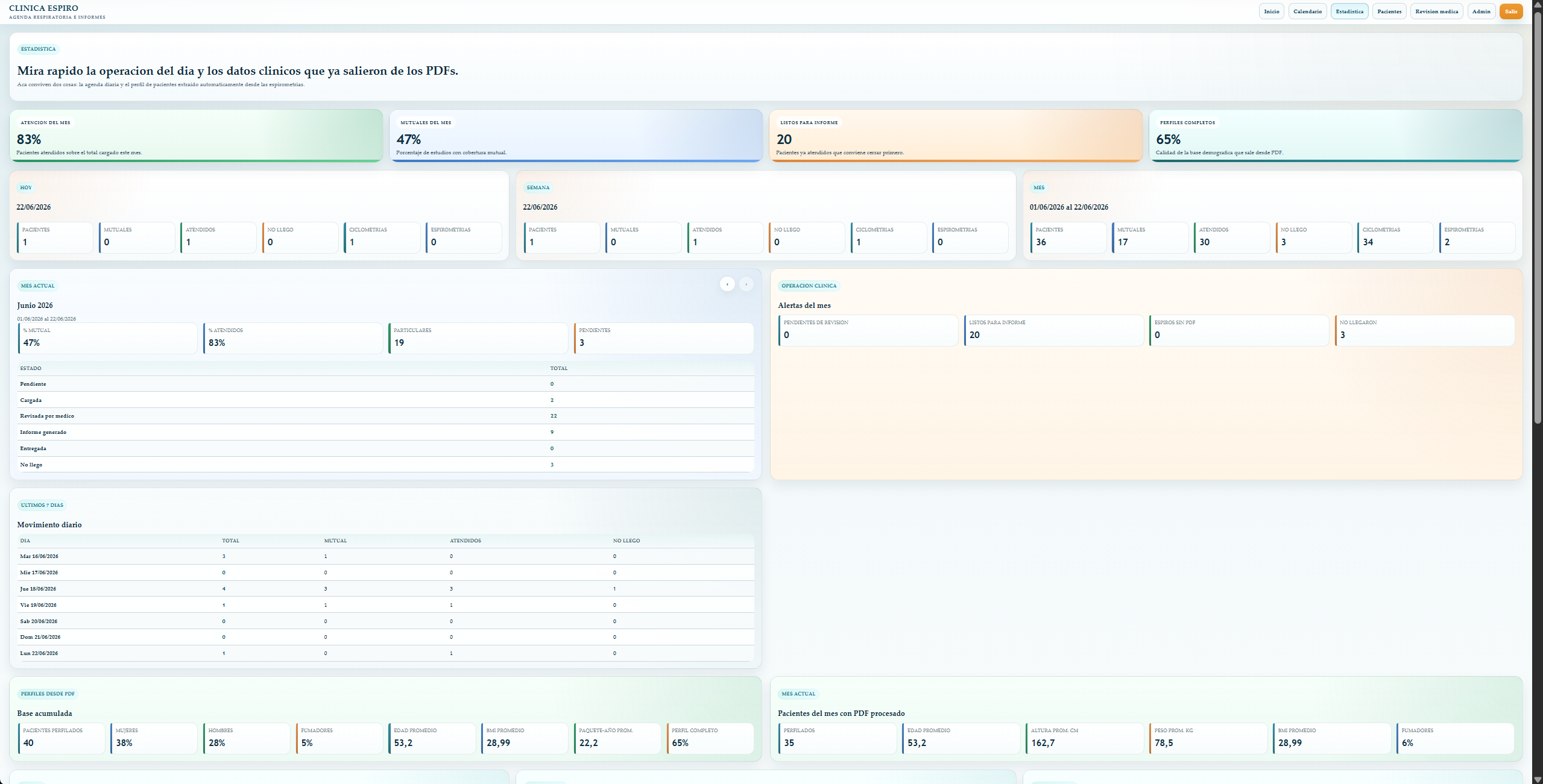
Clinic statistics
Monthly operational and descriptive clinical indicators show attendance, named mutual coverage, completed results, follow-up work, and aggregated profile data.
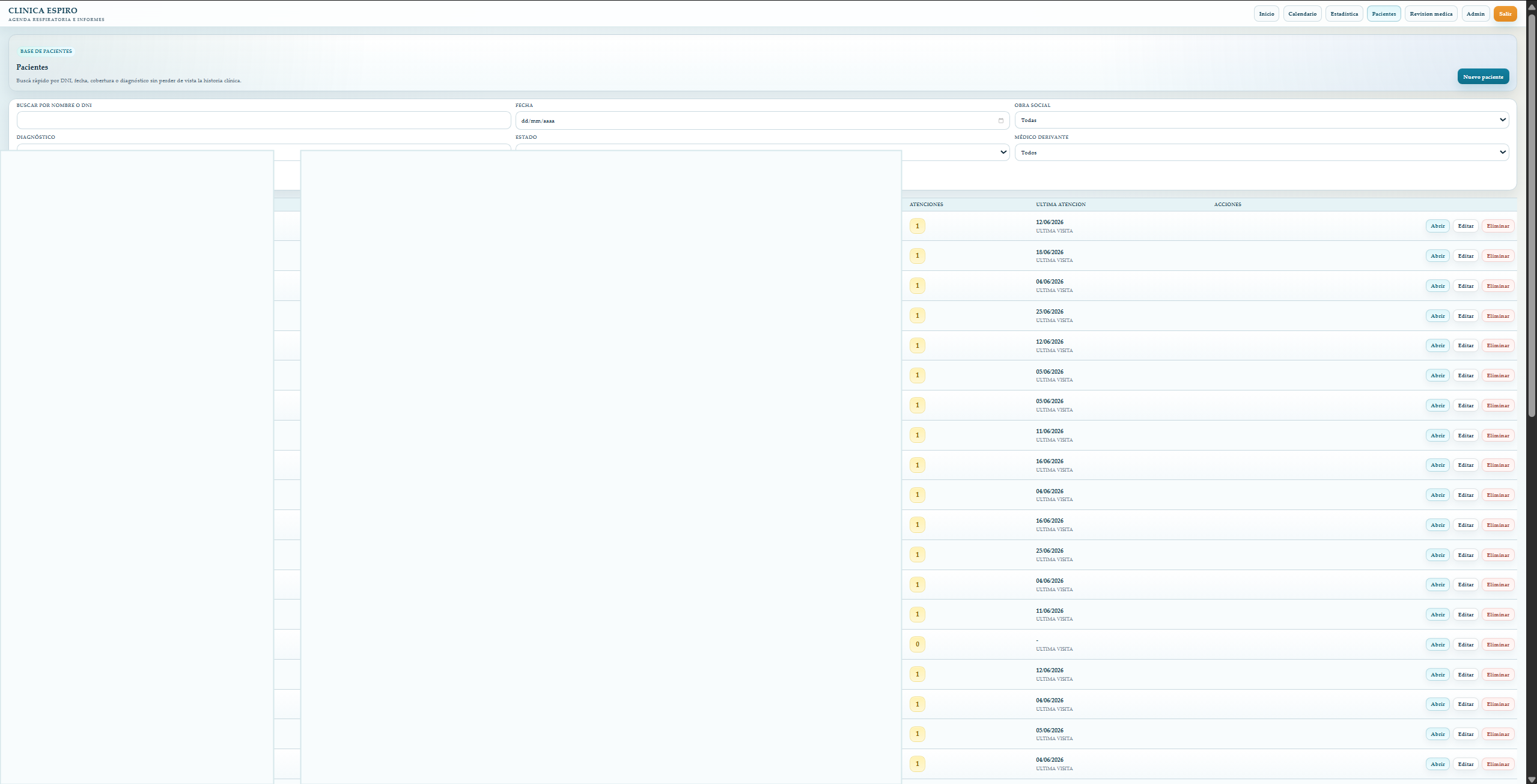
Patient database
Patient records centralize history, previous reports, spirometry results, and one clinical search by name, DNI, mutual, date, or final result.
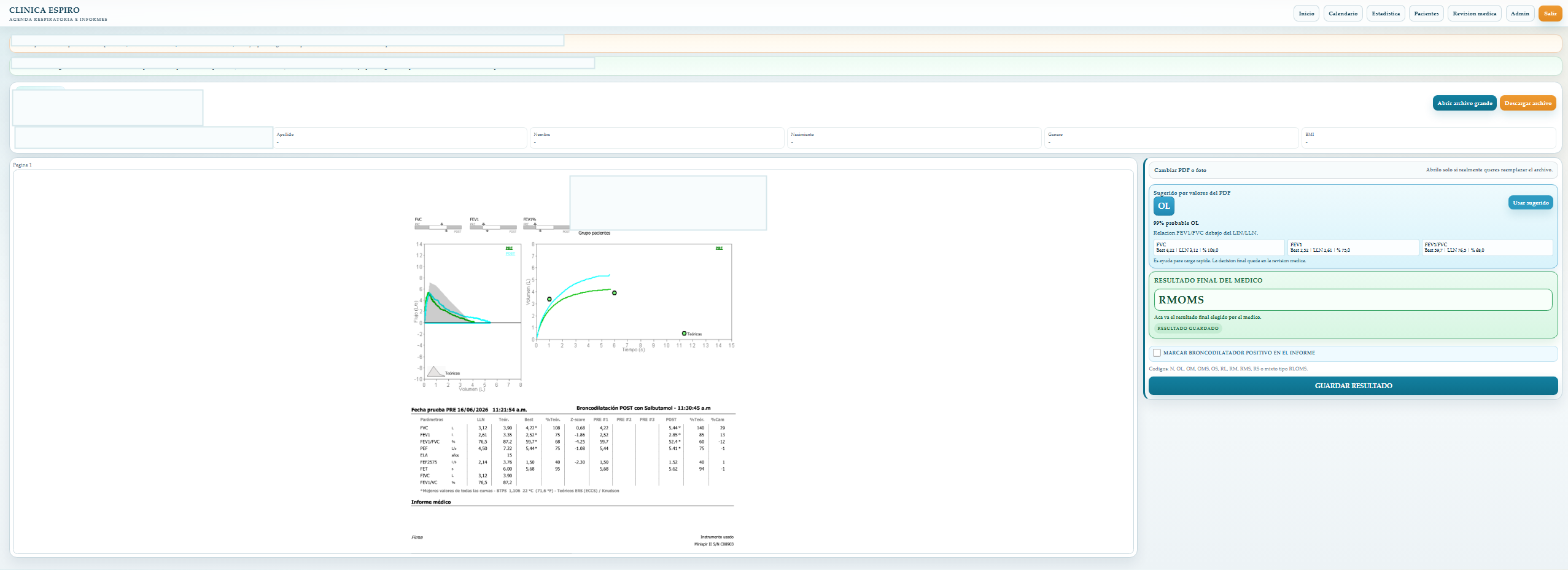
Doctor review workspace
The pulmonologist opens the spirometry file, sees patient data, reviews the automatic result suggestion, decides whether it matches, saves the final result and enables report generation.
What the system handles
Role-focused intake
Reception, doctor, and spirometrist each see the controls that matter for their part of the workflow.
Clinical values
SO2 and FC are tracked at rest and after bronchodilator because those values affect the final interpretation.
Doctor validation
The system can suggest a result, but the pulmonologist makes and saves the final medical choice before the report is generated.
Conditional reports
The printed document changes depending on study type, coverage, captured values and medical result.
Calendar control
The clinic can see loaded days, occupied days, completed days, and edit appointments when data was entered incorrectly.
History and statistics
Patients keep previous reports and final results, while the clinic can search by clinical context and review monthly activity by named mutual coverage.
Development process
Observed the workflow
I started from the actual clinic flow: what reception loads, what the pulmonologist reviews, what changes the report, and what used to require manual sending or printing.
Modeled the decisions
I treated each field as meaningful: study type, coverage, SO2/FC values, result and status all affect the final workflow.
Built around daily use
I connected intake, calendar, review, report generation, statistics and patient history so the tool works as one operational system.
Technical decisions
- Centralized patient and day status so reception, review and reporting stay in the same workflow.
- Conditional report generation for spirometry/cyclometry and private/insurance coverage differences.
- Reusable patient history with previous reports and spirometry results.
- Calendar view designed for fast day-level checks and corrections.
- Statistics layer built from the same clinical data already captured during daily work, including named mutual coverage and final-result distribution.
- Role-focused views reduce clutter for reception and doctor workflows while preserving the spirometrist's full operational access.
- Public portfolio screenshots anonymized to show the product without exposing patient identifiers.
Impact
The system removed several manual handoffs: data is captured once, the pulmonologist validates the result inside the app, and the final report can be generated without paper-based workarounds or low-quality photo sharing. The same record also powers traceable history, mutual coverage follow-up, and monthly clinic visibility.
Key takeaway
The strongest part of this project is not the stack. It is the product thinking: understanding which small clinical details matter, designing the flow around them, and making the software useful in a real workplace.