Production Case Study
Dental appointment system used in a real clinic.
A private PWA built for a dentist and her two secretaries to replace paper scheduling with patient records, appointment control, payments, insurance data, odontograms, and faster daily coordination.
100+
registered patients
3
daily users
PWA
installable app
Paper
workflow replaced
Client
Private dental clinic in Argentina
Role
Product analysis, UX, frontend, backend, database and deployment
Users
1 dentist and 2 secretaries
Status
Private production system
Evidence
Anonymized screenshots, 100+ registered patients and reference available upon request
Stack
Next.js, TypeScript, Supabase, PWA, Telegram Bot API
The problem
The clinic was managing appointments and patient information with paper notes. The process worked, but it was fragile: information lived in one place, appointment changes were easy to miss, and the dentist depended on manual coordination to know what was happening during the day.
The goal
Build a practical internal tool that matched the clinic's real workflow: fast enough for secretaries, useful enough for the dentist, and simple enough to become part of daily work without training friction.
Product views
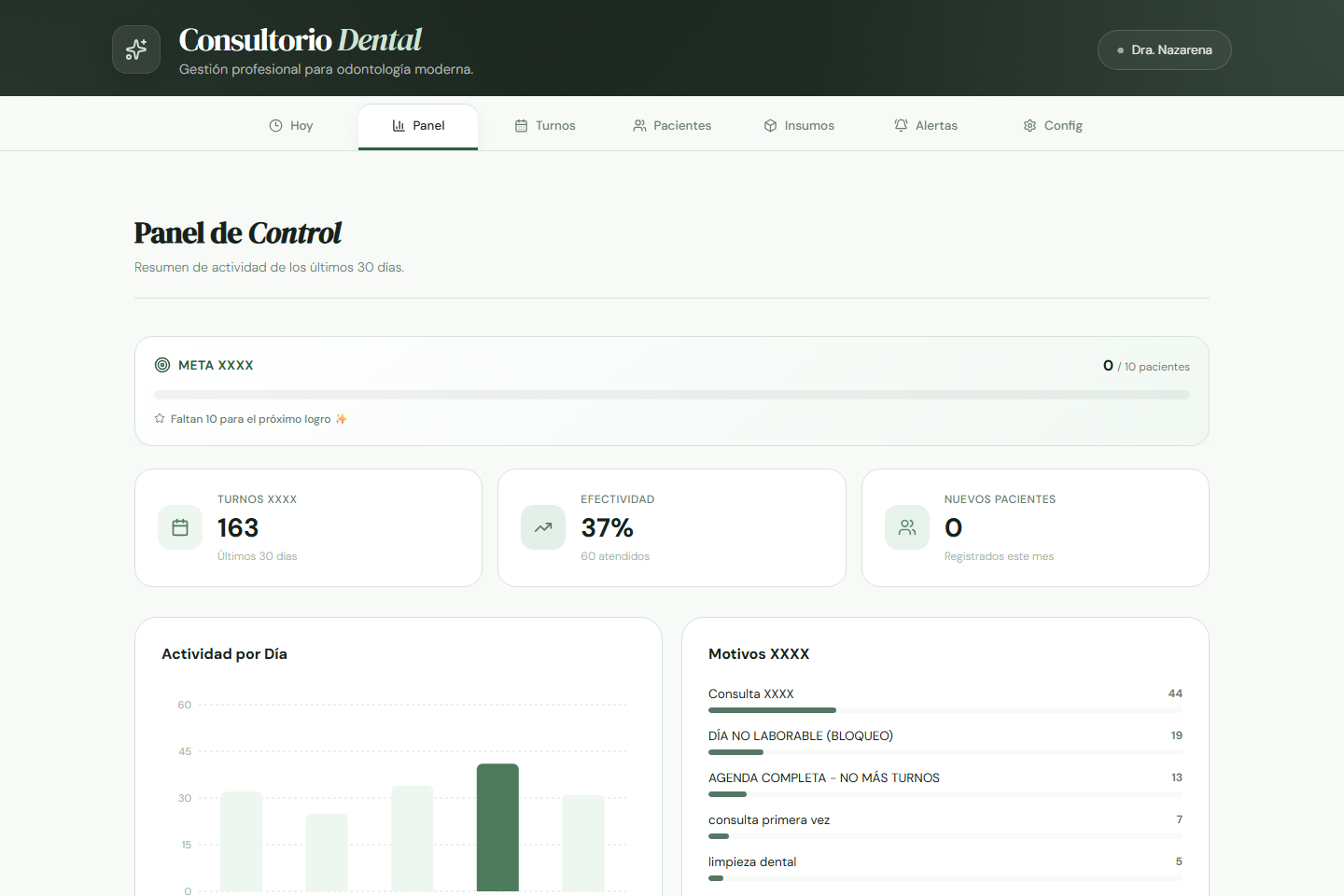
Control panel
Monthly metrics, patient activity and appointment status in one operational view.
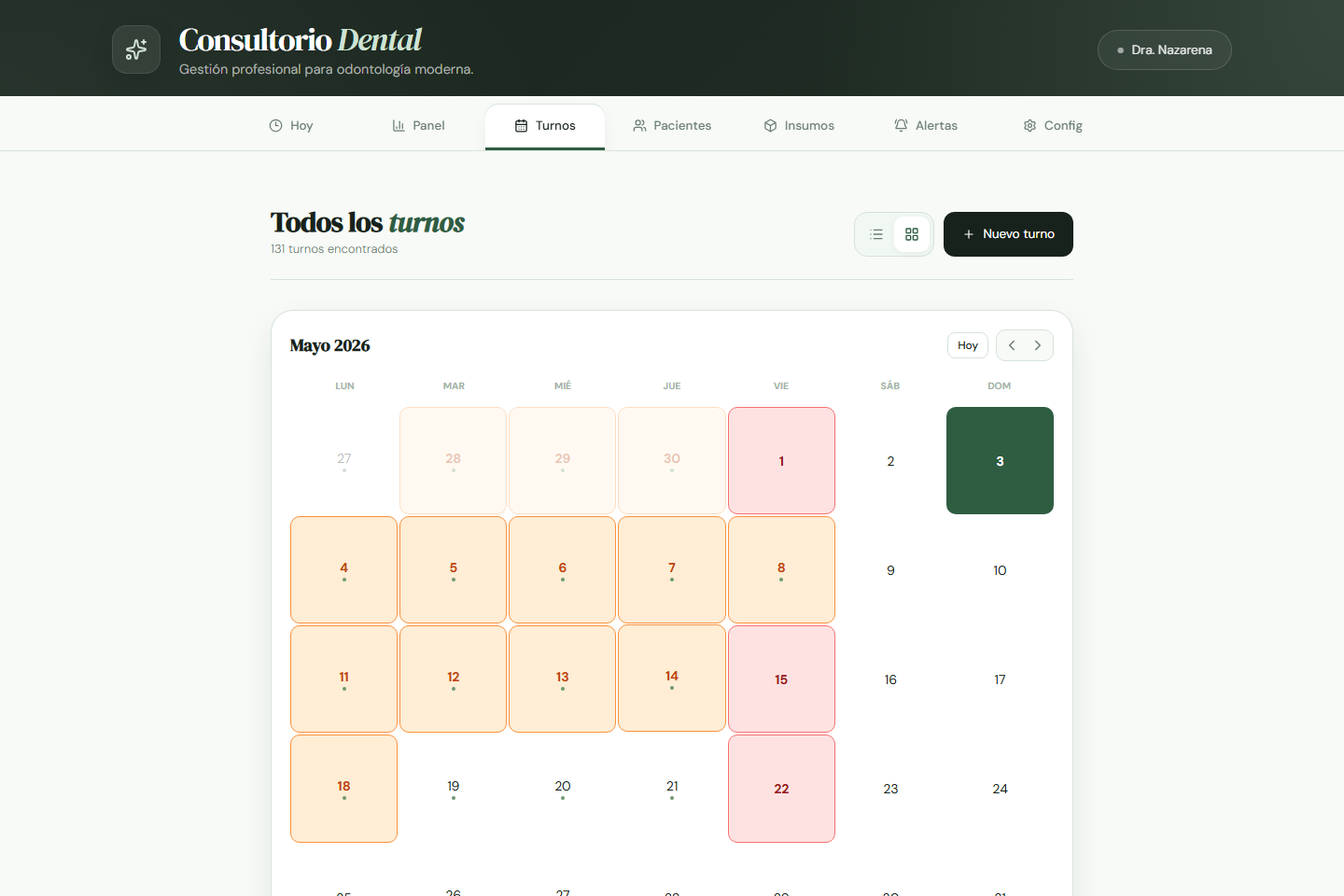
Calendar
Monthly scheduling with workdays, occupied days and availability context.
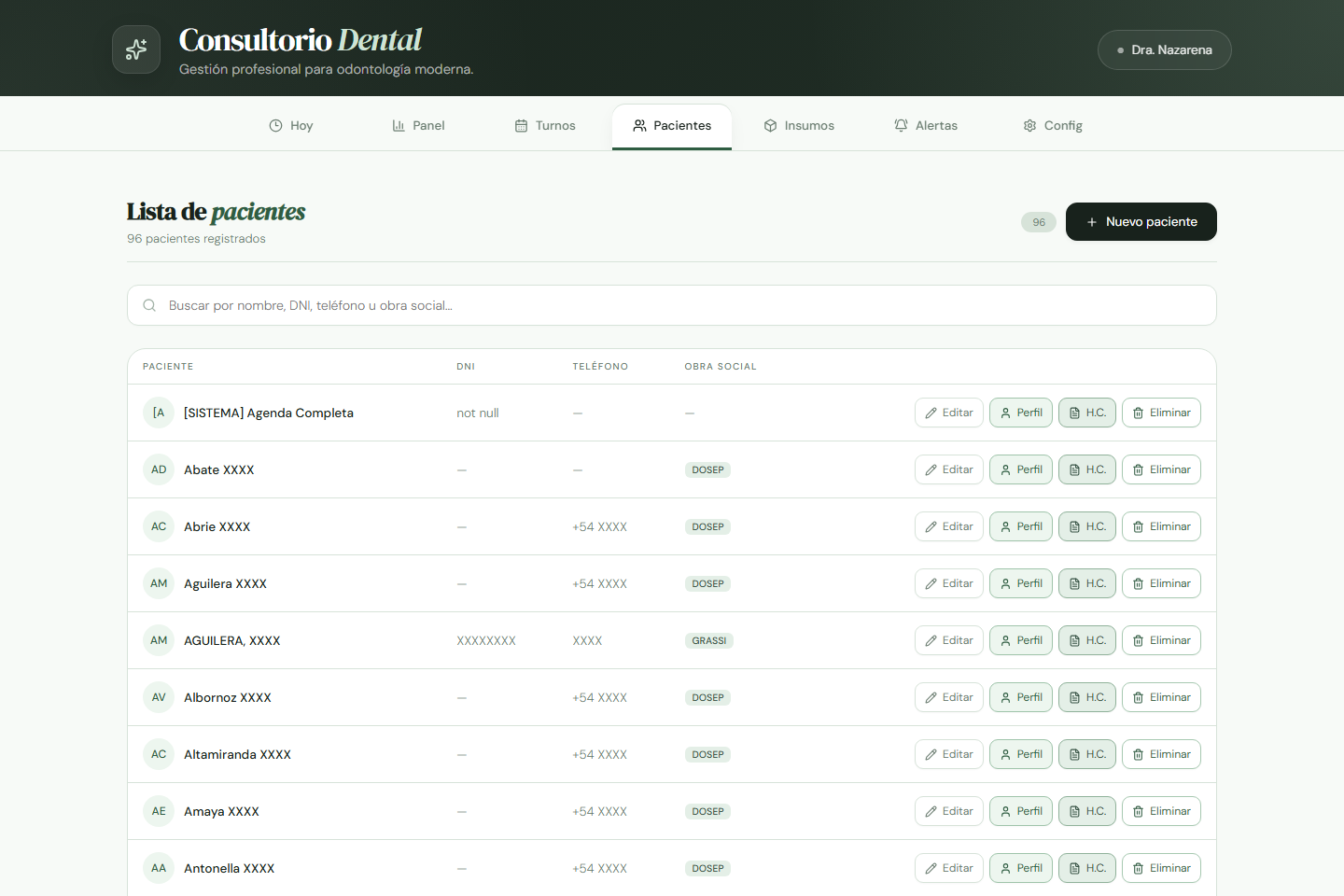
Patient list
Searchable records with coverage, profile access and clinical history actions.
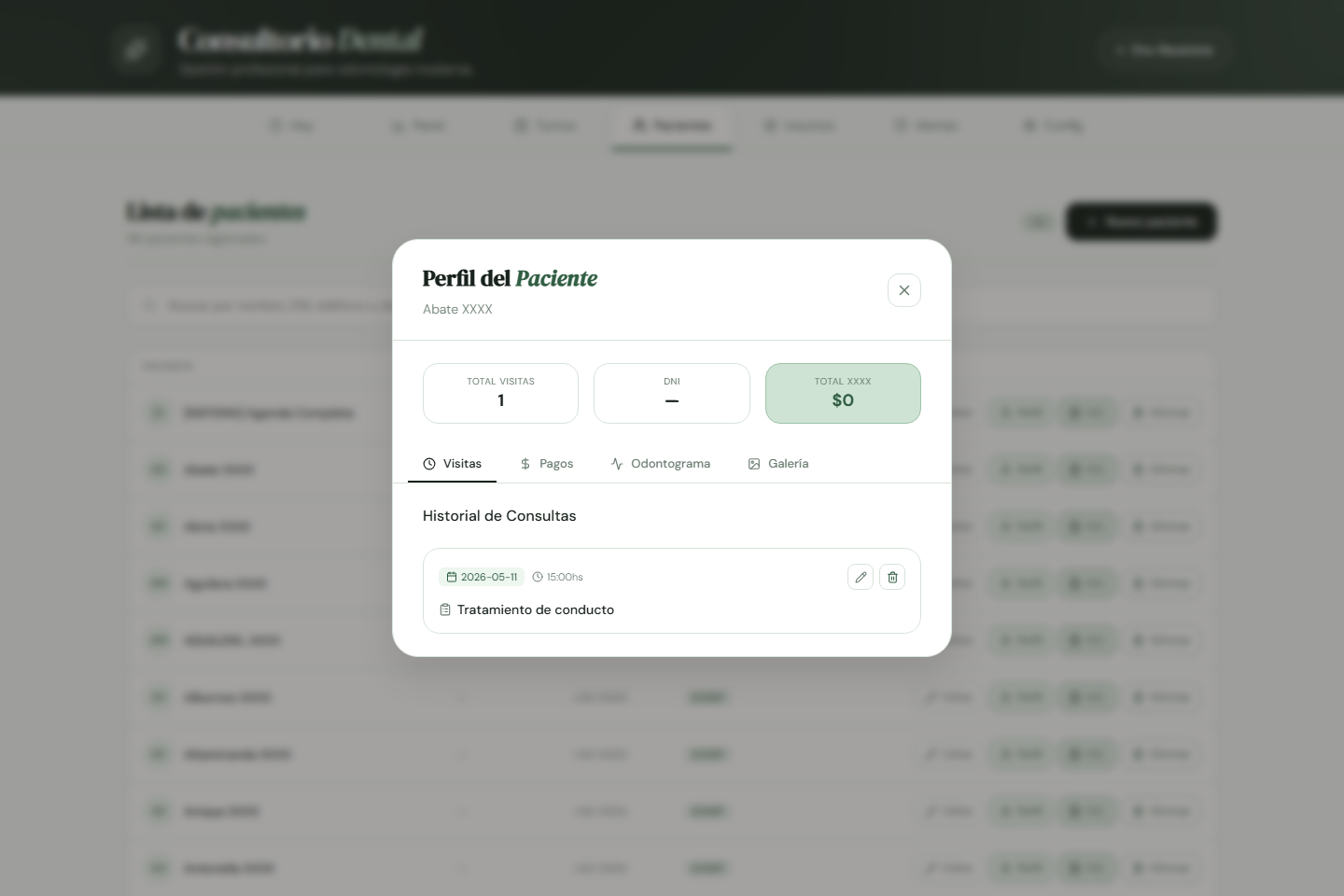
Patient profile
Visits, payments, odontogram, gallery and clinical context in a single profile.
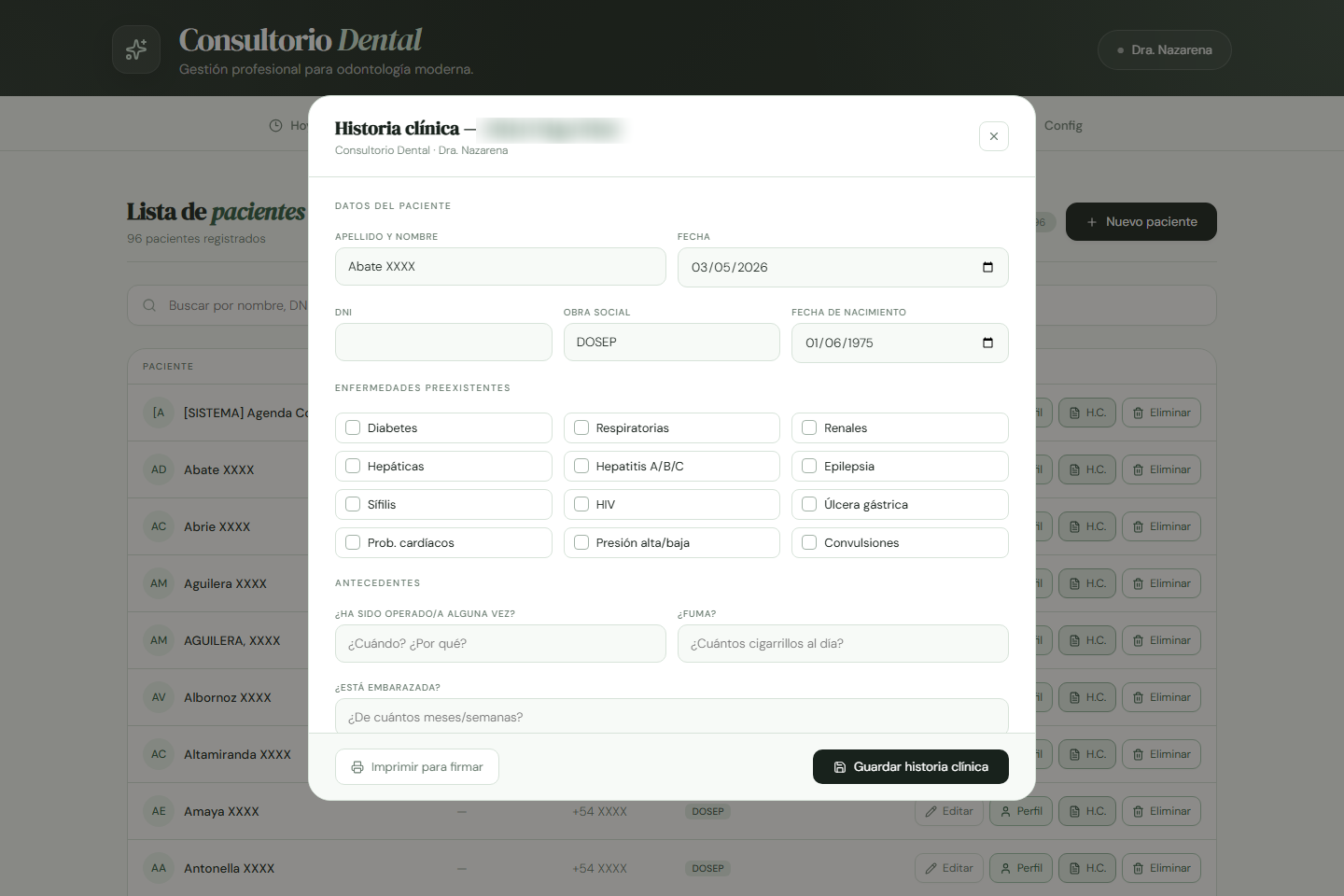
Clinical history
Structured medical fields that can be saved or printed for signing.
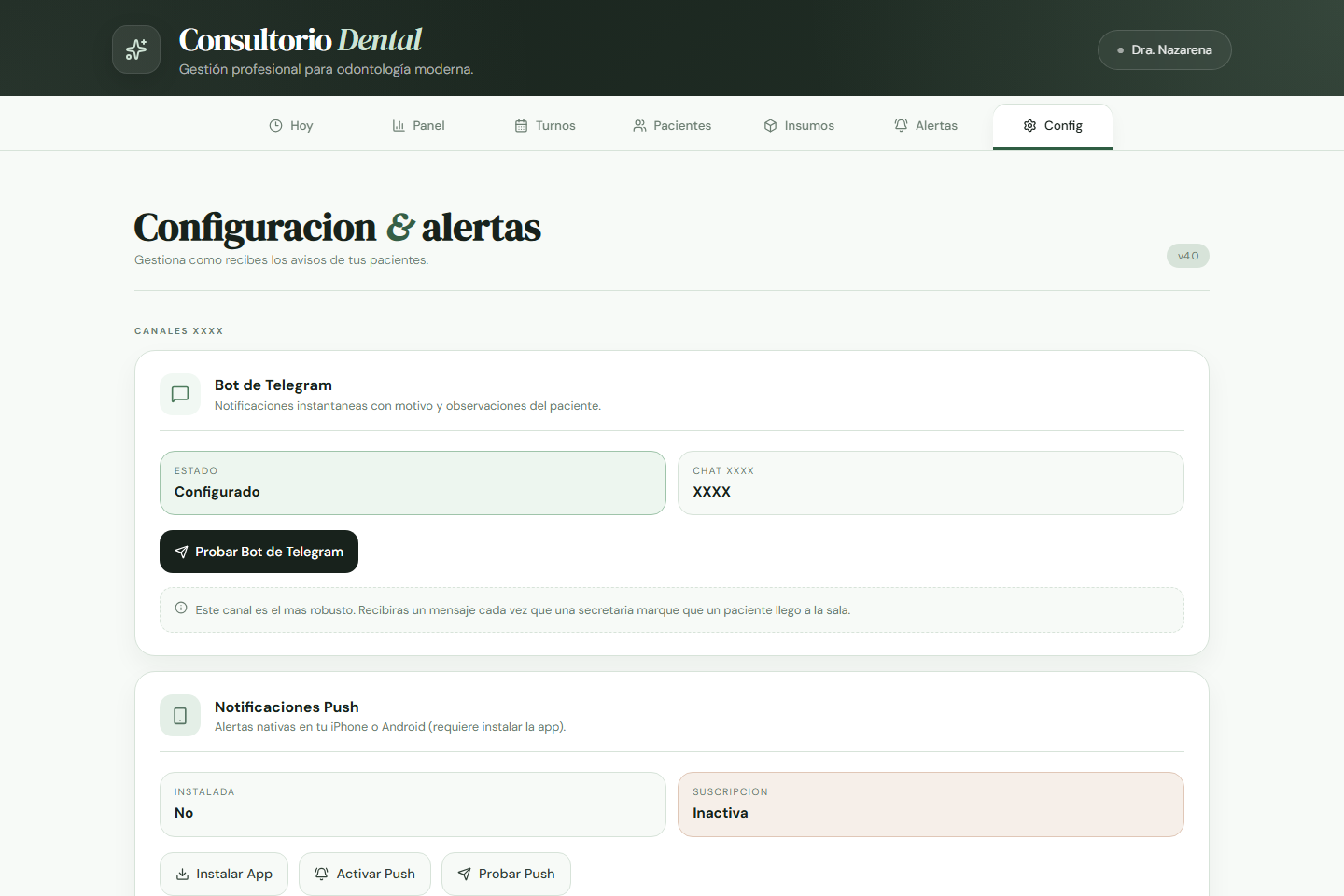
Arrival alerts
Push, email and Telegram configuration for real-time clinic coordination.
What the system does
Daily agenda
A shared view for today's appointments, patient status, arrival indicators, and quick actions.
Patient profiles
Patient records with personal data, insurance coverage, visit history, payments, notes, images, and clinical context.
Clinical tools
Odontogram, clinical history, alerts for relevant conditions, and treatment notes inside the patient profile.
Calendar control
The team can mark non-working days, full days, occupied slots, appointment duration, and overlap warnings.
Notifications
When a patient arrives, the secretary can mark it and notify the dentist through real-time updates and Telegram/push flows.
Operational data
Supabase stores appointments, patients, payments and status changes, giving the clinic a structured base for daily decisions.
How I built it
Observed the paper workflow
The first step was understanding how appointments were actually written, changed and communicated during a clinic day.
Built around real users
Features were added from feedback: patient profiles, payments, insurance, odontogram, day blocking, full-day markers and arrival notifications.
Kept the app practical
The priority was not adding every possible clinic feature. The priority was making the system fast, clear and useful for this specific team.
Technical decisions
- Next.js and TypeScript for an installable, responsive PWA.
- Supabase Auth, PostgreSQL and realtime subscriptions for shared updates across devices.
- API route for arrival status changes, push notifications, email fallback and Telegram integration.
- Relational data model for patients, appointments, payments, odontograms, images and inventory.
- Client-side image compression to keep uploads lighter for clinical documents.
- Calendar logic for blocked days, full days, appointment duration and overlap warnings.
Impact
The system is used as part of a private clinic's real daily workflow. It moved patient and appointment management from paper notes into a shared digital tool, with more than 100 registered patients, anonymized product evidence and constant feedback from the dentist and secretaries.
Why this project matters
This is the project that best shows how I like to work: observe a real operational problem, talk with the people who live with it, build the solution, and keep improving it until it becomes useful in practice.